
Best Smart Plug: A Complete Guide to Choosing the Right Smart Plug
What constitutes a smart plug?
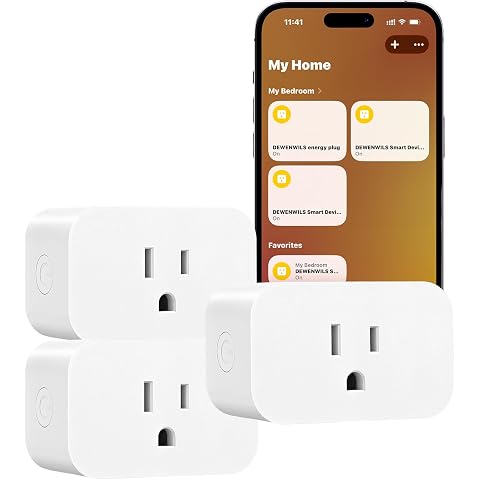
In essence, it is an unassuming device that gives an everyday appliance a more connected profile. By plugging in between the outlet and a compatible piece of equipment, one can then manage it from a supported smart-home platform or app. There is no need to put a hand on the power switch to turn something on or off. With the right model, we are able to set up all manner of automations, from timers and routines to full schedules. For those looking to make their home a bit smarter, a plug is often the most straightforward place to start.
The appeal of these devices is that they spare us from having to go through and replace every conventional item in the house. One can keep using the same old lamps, fans and chargers while still having the benefit of digital controls at one’s fingertips. It is a far more economical way to get some basic automation than to buy into a brand new smart appliance. Whether you are a novice or have been using smart-home tech for some time, a good plug has its attractions. Of course, the trick is to pick one that is in keeping with your network, your appliances and the ecosystem you prefer.
Why do we need smart plugs?
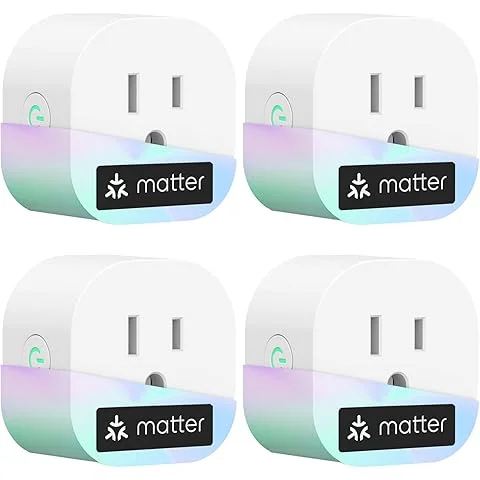
Using smart plugs helps ease and control the “smart” appliances we use daily around the house. All we need is an app, some Wi-Fi connection, and a compatible device to plug in and control from anywhere around the house or even outside the house. This feature is most useful when we end up forgetting to cancel plans and leave town without turning off appliances. It provides us with convenience by getting rid of repetitive tasks. Lighting routines, timers, schedules, and patterns can be set to do tasks for us.
Smart plugs allow us to control the time we plug in and unplug certain items and automate basic tasks. Programmable timers help automate the normal tasks we perform daily, like setting lamps to turn on in the evening or set an alarm to turn off lamps in the morning. Some plugs come with the feature of displaying energy stats on the appliance we are controlling. Some even come with touch screen controls which most people appreciate. Smart plugs come with control and convenience which is great for most modern households.
Features of the Best Smart Plug
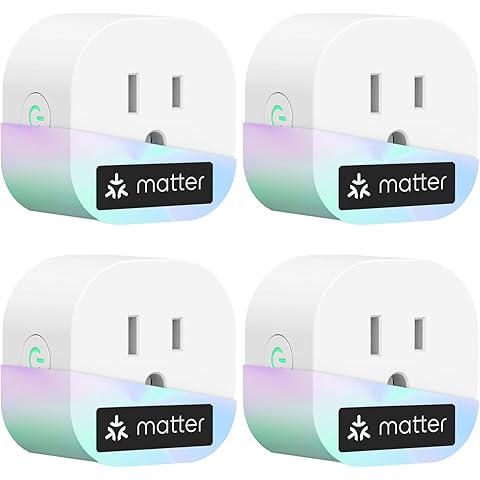
What should we look for when choosing a smart plug? Connectivity and compatibility are probably the most important features. Even the best-featured smart plug will cause frustration if it is not able to connect to our home network. As for connectivity options, most, if not all, use WiFi. Some newer plugs, on the other hand, will likely support both Matter and Thread. It is always a good idea to check the manufacturer’s specs to see which wireless technologies are supported. Compatibility with our existing smart-home system should be verified.
When looking for a smart plug, the level of scheduling functionality offered is also important. Smart plugs automate adding manual control to our daily lives. With a specific control schedule in place, we never have to worry about manually powering on/off an appliance. Additionally, plugs offer control functionality via timers to control the duration of appliance operation. Most higher-end plugs offer routines to create control groups with other compatible smart-home devices.
Smart Plugs with Energy Monitoring
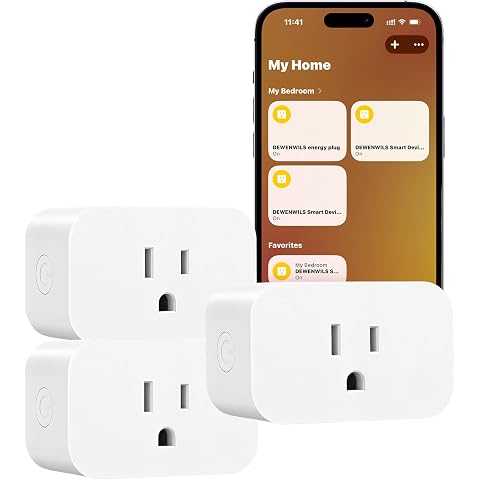
One benefit of a smart plug over a standard plug is the ability to collect data on energy usage. Many companion applications can capture energy usage data on plugged-in appliances and offer context on that data usage. This is useful because it allows us to understand the power consumption for appliances by the hour or minute. Rather thangenerate guesses and assumptions on which appliances may be the biggest culprits for power consumption, we now have the data to make more informed decisions. For households focused on energy usage, these plugs can provide a lot of information.
Energy monitoring doesn’t equal reduced energy bills, and smart plugs don’t replace the devices. The data is most useful when it is used to control usage. We can now determine which devices have the potential to be biggest energy savings when usage is addressed. We can program devices to shut off after they are used, whether that further supports the appliance’s intended purpose or not. When used in conjunction with automated monitoring, smart plugs help manage household power usage.
Best Smart Plug for Voice Control
There are additional benefits to choosing a smart plug. If we can connect a smart plug to a supported device, we can control the connected device with spoken commands. This feature is very convenient when we are busy and don’t want to go looking for our phone. We can also assign a name to the plug to make voice commands as specific as possible, for example, “Bedroom Lamp” or “Desk Fan.” Each smart plug and each smart-home control system has different voice control features, and they may not have all the same features.
It can be very useful for households that have other voice-controlled devices to integrate a smart plug. We can also combine the voice control feature with other control systems to maximize the options we have for controlling a given device. We can’t expect that every smart plug on the market works with every voice control system. Some plugs do a better job integrating into other systems. A good smart plug seamlessly integrates into our system.
Best Smart Plug for Scheduling
Many smart plugs come with a variety of practical features, including scheduling. A particular time can be defined when an appliance is supplied with power and the exact time when it is switched off. This can help with lamps, some fans and other items that can be safely powered on and off by a schedule. We can automate this with the smart plug, instead of remembering to carry out the same task every day. This is a straightforward feature that can help you save time and have a more regular routine.
However, if the application can be programmed more advanced, different schedules can be used for the weekdays and weekends. An appliance that is turned on at a specific time could be suitable for a morning schedule, and a specific time could be suitable for turning off another appliance. These routines may change when there is a change in our daily routine. The more flexible the scheduling system, the easier it will be to personalize the smart-home experience. When comparing smart plugs, you should also take into account the options for scheduling.
Best Compact Smart Plug
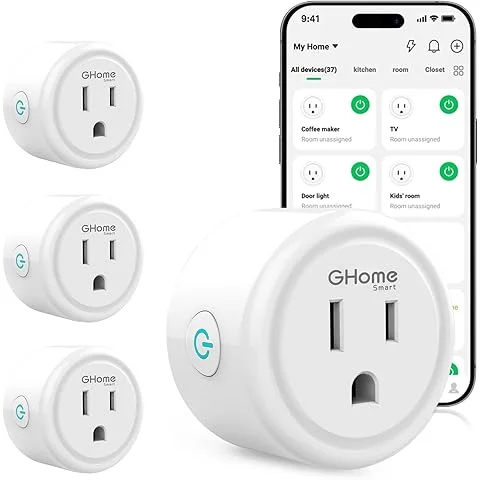
The size of the smart plug is as important as its software capabilities. There can be a nearby outlet that’s blocked by a large plug and therefore hard to plug another device into. This can be particularly cumbersome in bedrooms, offices, and kitchens, as well as other spaces with limited outlets. A small or mini smart plug can offer the same basic smart plug functionality and still have more room. The dimensions of the products should always be checked before buying.
The compact design may also make the use of the smart plug easier in crowded areas. A small plug, for instance, can fit more easily behind furniture or near a desk with multiple cables for instance. But a smart outlet should not be installed where it will be obstructed from ventilation or subjected to unsafe conditions. Convenience and safety of proper physical design should be a balance. Even though the smallest plug is not necessarily the best plug if it does not conform to other requirements.
Indoor and Outdoor Smart Plugs
There are indoor smart plugs and outdoor smart plugs, as they are built for normal interior environments and outdoor applications, respectively. For outdoor lighting or other exterior equipment, we should choose one that is specifically engineered for outdoor applications. Construction of outdoor models usually aims to offer more protection from environmental influences. A plug that is designed for inside is not acceptable for use outside just because it fits into an outdoor outlet. Operating environment is one of the factors to consider when making a choice of the appropriate product.
Scheduling and remote-control can be used as well in outdoor applications. We could program schedules for outdoor lights or other compatible equipment, without having to manually turn them on each night. But it is always necessary to confirm the electric requirements of the connected equipment and adhere to manufacturer’s instructions. All of these factors should be taken into account when you consider weather exposure, moisture and electrical load. When installing any electrical device outdoors, safety should always be more of a priority than convenience.
The safety precautions for smart plugs are as follows:
When choosing a smart plug, safety should be among the top considerations. The electrical rating of the appliance we want to connect to the device should be checked. Any device which exceeds the smart plug’s rated load can cause hazardous conditions. All instructions provided by the manufacturer should also be adhered to. A smart plug should not be considered a substitute for good electrical installation.
Extra caution should be taken with high power appliances and equipment that gives off significant heat. Space heaters and other high load appliances might need special attention and should not be assumed to be suitable for a smart plug. Also do not use a plug with an appliance unless the appliance manufacturer allows such use. If you have any doubt about an electrical connection, it’s best to get advice from a professional. Never sacrifice electrical safety for convenience!
How to use Smart Plugs for Automation Ideas.
The automation features of a smart plug are incredibly valuable, if used properly. We can design a program that will switch on a suitable lamp at a certain time in the evening and switch it off automatically later. Also, morning schedules can be designed for the compatible appliances that will function safely following a power loss. These are simple exercises that can eliminate repetitive tasks from our daily lives. Small automations can add up to a very convenient home over time.
More than one smart plug can be programmed to establish various schedules in individual rooms. A bedroom plug might be used on a bedtime schedule, and an office plug might be used on an office schedule. A living room lamp can adopt the routine that we have at night. The potential is dependent on the smart-home platform and the appliances being used. We can begin with just a few simple automations, and incrementally add more until we have a smart home system that suits our lifestyle.
How to Choose the Best Smart Plug
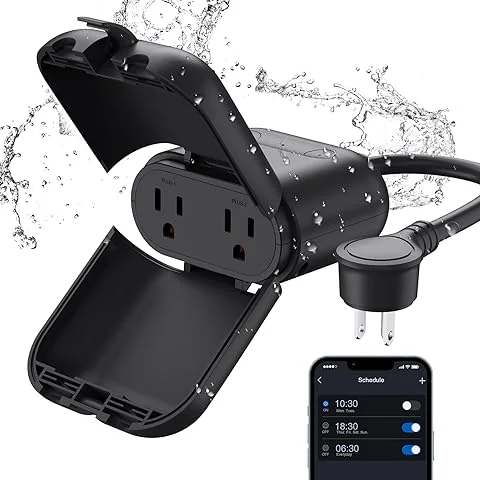
The first step to picking the right smart plug is to determine what exactly we want it to do. When the only requirement is remote, on-and-off control, an inexpensive version might suffice. For electricity information we need energy monitoring. For the larger multi-platform smart home, Matter compatibility could be a consideration. It should also be tested for compatibility with your preferred voice assistant and smartphone app.
Then the electrical rating, connectivity, physical size, safety characteristics and software support should be compared. Price is significant but shouldn’t be the sole deciding factor. Some of the features and capabilities of a slightly more costly plug could prove to be more reliable, more compatible, and more useful over its lifespan. When analysed together, these factors can help us select a product that offers a better long-term value. The best smart plug is the one that works to solve our particular problem, without being needlessly complicated.
Final Thoughts
One of the easiest methods to start using some automation in a regular house is by adding a smart plug. It can offer remote control, scheduling, timers, voice control, and (with some models) energy monitoring. These features can be used to increase ease of management of compatible appliances and to decrease repetitive manual tasks. Smart plugs are easy to install and can be used by both novice and pro smart home users.
It will depend on our needs, appliances, network and smart-home ecosystem. Reliable connections, suitable electrical ratings, handy automation options, and interoperability with existing systems should be considered priorities. For those who want to achieve more interoperability between their smart home devices, Matter support may prove helpful, and for users who want to understand their electricity usage, energy monitoring may help. With careful comparison before buying, we can find a smart plug that provides us convenience, flexibility and stable and reliable use every day.